Used industrial oil is one of the most toxic liquid wastes generated in the world. Due to its high polluting power in case of spillage, its correct management is key to protect the environment. At Cator, we are committed to a circular economy model that allows us to regenerate this waste and transform it into a useful resource, reintroducing it to the market, avoiding its destruction and significantly reducing the environmental footprint compared to obtaining it through hydrocarbon extraction.
Pre-sampling: The first step towards circularity
Before the oil arrives at our facilities, we offer the possibility of carrying out a free preliminary sampling, directly at the customer’s facilities. This initial analysis allows us to verify that the waste meets all the technical requirements necessary for processing. Thanks to this, we guarantee the feasibility of regeneration, optimize resources and ensure quality and efficiency standards from the initial phase.

A technological process at the service of the environment
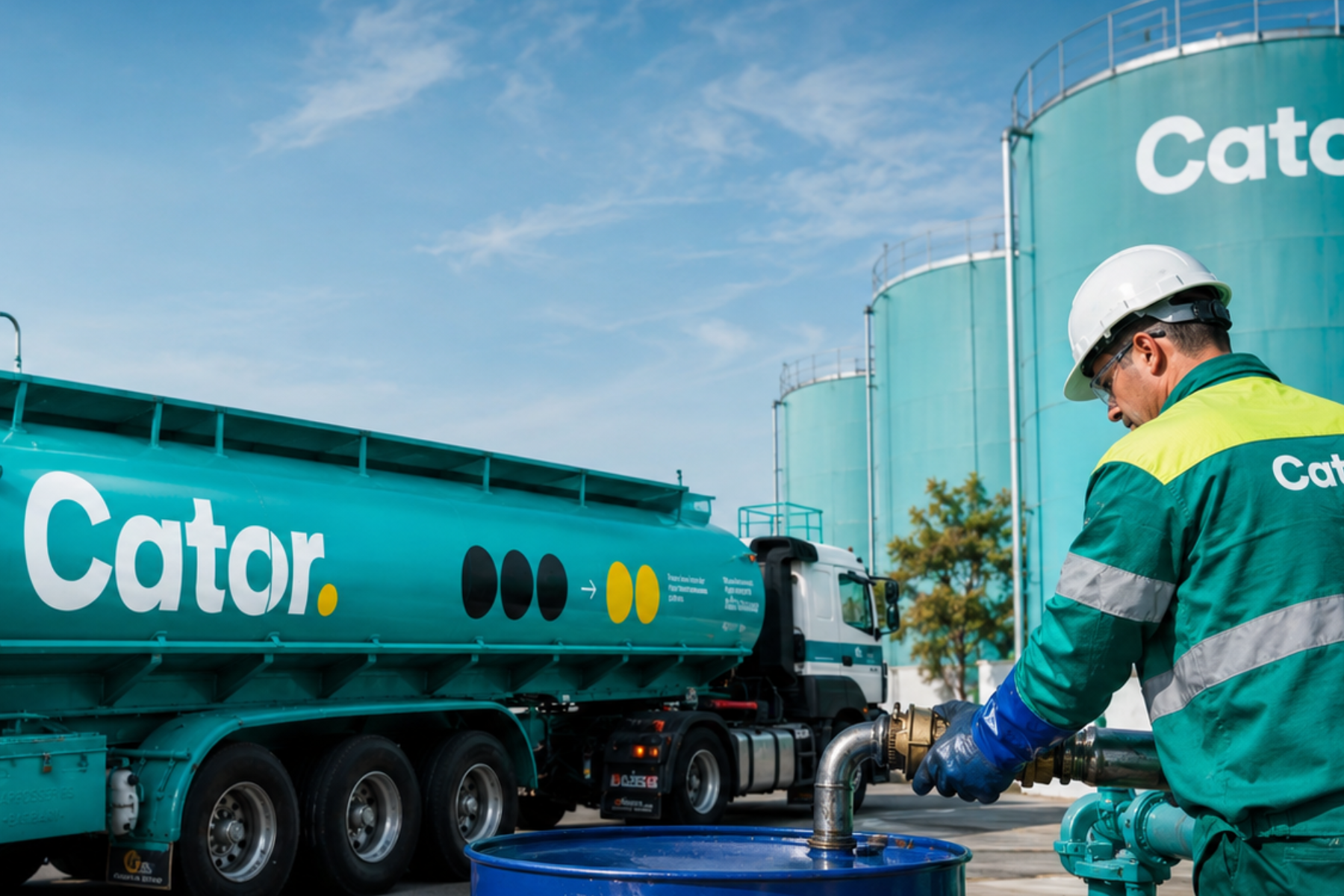
Our regeneration plant, located in Alcover, has the capacity to treat up to 44,000 tons of used oil per year. At the heart of this process is VAXON technology, an improved vacuum distillation system developed with the support of our R&D team. This technique allows us to separate impurities from the oil and recover a high-quality base oil, ready to be reintroduced as a raw material in the formulation of lubricants.
Throughout our history, we have succeeded in optimizing the maximum material utilization, increasing energy efficiency and reducing waste generation. These are objectives that we are improving year after year.
Value-added circular products
The regeneration process results in useful products that are reintroduced into the market as raw materials:
– Regenoil® Catorex 80: Regenerated base oil for manufacturing new lubricants.
– Regemec: Regenerated glycol for the production of antifreeze.
– Asphalt bitumen: Asphalt product intended for the construction industry.
This process is an example of how, by applying circularity criteria, we can get the most out of waste, obtaining high value-added resources without compromising quality or performance.
Energy efficiency and sustainability at every stage of the process
One of the fundamental pillars of Cator’s philosophy is energy efficiency. It is not enough to regenerate waste: it is essential to do so while minimizing the consumption of resources and reducing the environmental impact as much as possible. For this reason, from the very design of our plant in Alcover, we have prioritized the incorporation of technologies that guarantee an environmentally friendly operating model.
The regeneration of used oil requires energy, both thermal and electrical. At Cator we have developed an integral system that allows optimizing each stage of the process, making use of renewable energy, heat recovery and water reuse, among other solutions.
Renewable electric energy
Part of our plant is powered by a system of photovoltaic solar panels that generate clean electricity for our operations. This not only reduces our carbon footprint, but also provides us with energy independence and stability in the face of fluctuations in the electricity market.

Thermal energy
The vacuum distillation process requires heat, and at Cator we generate it through the self-consumption of light fuels from the oil treatment itself. This internal solution converts part of the treated waste into our energy source, further closing the circular cycle.
Sustainable water management
Another key aspect of our efficiency is water reuse. We treat and reuse both rainwater and water from our own industrial process, thus reducing the consumption of potable water. This water management system allows us to conserve an increasingly scarce and valuable resource and to avoid plant discharges.
The improvements made in the plant are aimed at achieving the lowest possible energy consumption, avoiding thermal losses and reducing the need for additional resources.
Concrete results of our energy strategy
Thanks to the implementation of these measures, we have achieved:
– Reduce energy consumption per ton treated.
– Reduce dependence on external fossil fuel sources.
– Improve our emissions balance and actively contribute to the decarbonization objectives at the European level.
– To demonstrate that it is possible to carry out an intensive industrial process with a very low environmental impact.
In addition, our R&D department is continuously working on process optimization and the integration of new, more energy-efficient technologies. We firmly believe that innovation is the way to continue improving our operations and to move towards a total circularity that encompasses not only the waste, but also the resources used to treat it.
Since 1993, at Cator we have:
– Collected and regenerated more than 1,000,000 tons of used oil.
– Produced more than 700,000 tons of high quality base oil.
– Avoided the emission of 3,000,000 tons of CO₂ into the atmosphere.
These figures not only demonstrate the effectiveness of the circular model, but also its enormous positive impact on the environment and the economy.
Beyond technology: outreach and social engagement
Our commitment goes beyond the industrial process. With initiatives such as THE CERCLEour environmental classroom, we promote environmental environmental education and the dissemination of the circular economy. We receive schools, institutions, associations and professionals who want to learn first-hand how a sustainable management model works.

We also collaborate with local entities and NGOs, supporting solidarity and environmental projects that reinforce sustainable development in our environment.
At Cator we demonstrate every day that the circular economy is possible, viable and profitable. We convert toxic waste into valuable resources, reduce emissions and the use of raw materials from non-renewable sources. We involve our employees with our commitment: to collaborate for a cleaner, more efficient and circular future for everyone.