The management of industrial waste oil must be carried out with caution. In many companies, this waste is generated periodically during maintenance tasks, lubricant changes, replacement of hydraulic fluids or machinery overhauls. If it is not well controlled, it can become an environmental, documentary, logistical and operational problem.
What is industrial waste oil?
Used industrial oil is mineral or synthetic oil that is no longer suitable for the use for which it was designed. It may come from machinery, hydraulic circuits, maintenance equipment, compressors, motors, gearboxes or other systems that require lubrication or power transmission.
Some common examples are:
– Used lubricating oils.
– Used hydraulic oils.
– Industrial machinery oils.
– Oils from maintenance operations.
During its use, the oil incorporates impurities due to wear, humidity, traces of additives or other contaminants. For this reason, once its useful life has expired, it should not be mixed with other waste or treated like any other industrial liquid.
Risks of improper storage
Storage is one of the most critical points in the management of used oil. Although the removal is carried out by an authorized manager, the company that generates it must ensure that the waste remains in suitable conditions while it is in its facilities.
Environmental risks
A leak or spill can contaminate soil, sewage systems or water. To reduce this risk, it is advisable to use closed containers, in good condition and located in areas marked and prepared to contain possible leaks.
Security risks
A damaged drum, an improperly closed tank or an untidy storage area can lead to falls, slips or handling incidents. In addition, mixing used oil with water, solvents, fuels or other wastes can complicate their identification and subsequent treatment.
Operational risks
When management is delayed, used oil can accumulate, occupy useful space, interfere in maintenance areas or cause logistical emergencies. It can also generate non-conformities in audits or inspections if the company cannot demonstrate the periodicity of its storage and subsequent management.
Documentary risks
Poorly organized management can hinder the traceability of the waste. If the company does not keep the collection, delivery or treatment documentation correctly, problems may arise during audits, inspections or internal controls.
Logistical risks
Requesting removal when the tanks are already at their limit reduces the margin for maneuver. This can lead to emergencies, difficulties in coordinating access, delays in collection or unnecessary accumulations in the plant.
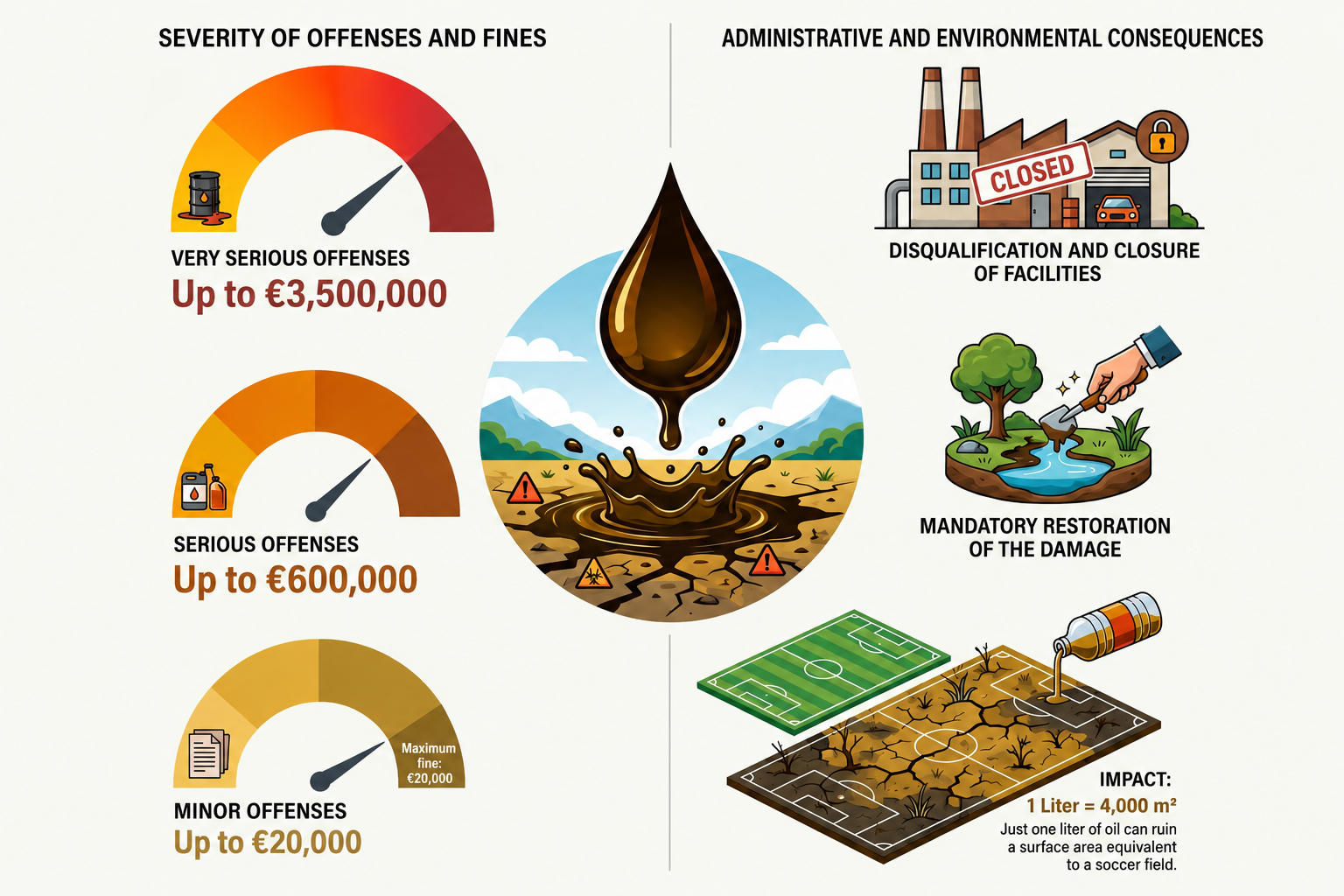
Penalties for improper storage of used industrial oil.
When to request the collection of used oil
Waiting until the tank is full reduces the margin for maneuver and increases the risk of incidents. It is advisable to anticipate and plan collection according to the rate of generation, storage capacity and expected maintenance periods.
It is convenient to request the withdrawal when:
– The tank or drums are approaching their operational limit.
– A technical shutdown or maintenance campaign is planned.
– A massive change of lubricants or fluids is to be performed.
– The storage area begins to lose order or space.
– You want to close a document or audit period correctly.

In companies with periodic and continuous generation, establishing a regular collection frequency helps to avoid emergencies and maintain control over the waste. An authorized manager helps to manage the used oil in a safe, traceable and aligned way with the applicable regulations, taking care of the collection through authorized channels, the documentation of the withdrawals and the final treatment of the waste. Cator provides the added value of the regeneration of used industrial oil, which allows transforming a waste with potential environmental impact into new raw materials, adding value to the company’s operations and contributing to a more circular model.