At a time of growing environmental awareness and increasingly strict regulations, the correct management of used industrial oil has become a key pillar for sustainability. This waste, classified as hazardous, not only represents a potential risk to the environment if not properly managed, but also offers a great opportunity: its regeneration allows it to be returned to the production cycle as a useful raw material, thus reducing the ecological impact of industrial and automotive sectors. Discover in this article the environmental benefits of regenerated waste oil.
Why is it so important to manage used industrial oil correctly?
Used industrial oil, after its useful life, does not disappear: it becomes a waste with a high polluting power. It often contains highly toxic substances such as chlorine, phosphorus, sulfur, zinc, lead, cadmium and other heavy metals, as well as aromatic compounds that are extremely harmful to health and the environment.
These are some of the real risks:
– Soil contamination: 1 single liter can affect up to 4,000 m², the surface of a soccer field.
– Water pollution: 2 liters could ruin a river or lagoon the size of an Olympic-sized swimming pool, affecting entire ecosystems and subway aquifers.
– Air pollution: 5 liters burned incorrectly can emit enough gases to pollute the air a person breathes for 3 years.
Regeneration is the process by which used oil is transformed into base oil, reused in the formulation of lubricants. Instead of discarding the waste, regeneration makes it possible to extend its useful life and close the use cycle.

Environmental benefits of regenerated used oil
Pollution prevention
The correct collection and treatment of used oil prevents its discharge into soils, waterways or sewage systems. According to Sigaus, only in 2024, and thanks to responsible waste management:
– The contamination of 132,568 tons of used oil was avoided.
– The environment was protected from highly harmful atmospheric emissions.
– Thousands of hectares of agricultural and natural land were safeguarded.
This impact is direct, tangible and constant: every liter managed avoids potential large-scale damage.
Saving of natural resources
Regenerated oil replaces virgin oils, reducing dependence on fossil resources such as petroleum and reducing the exploitation of finite resources. In addition:
– In 2024, the extraction of 32 million barrels of oil was avoided, which is equivalent to the crankcase oil of 15 million vehicles.
– 61,271 tons of new lubricants were produced from regenerated oil.
– A total of 30,227 tons of fuel oil were obtained as a secondary energy source.
Reduction of energy consumption
Producing regenerated base oil consumes much less energy than making it from scratch with crude oil. In 2024, 1,275 GWh of energy was saved, equivalent to the electricity consumption of 389,713 Spanish households for a full year. This represents a significant relief for the country’s energy demand and an important contribution to industrial efficiency.
Lower CO₂ emissions.
Oil regeneration also reduces greenhouse gas emissions, such as carbon dioxide (CO₂), which are responsible for climate change. In 2024, 83,689 tons of CO₂ were avoided , the same as would be emitted by 332 round-trip transatlantic flights by full aircraft. This positive environmental impact translates into a direct contribution to European and national emission reduction targets.
Regulatory compliance and environmental objectives
Regeneration is not only a voluntary practice: it is considered a priority in Spanish and European environmental legislation. Law 7/2022 on waste and contaminated soils andRoyal Decree 679/2006 establish a clear framework:
– 95% of used oil must be collected.
– 100% should be valued.
– At least 65% must be regenerated.

Regenerating used industrial oil is much more than complying with the law. It is an opportunity to transform a problematic waste into a valuable resource, reduce the environmental impact of key industries and move towards a more efficient and sustainable future.
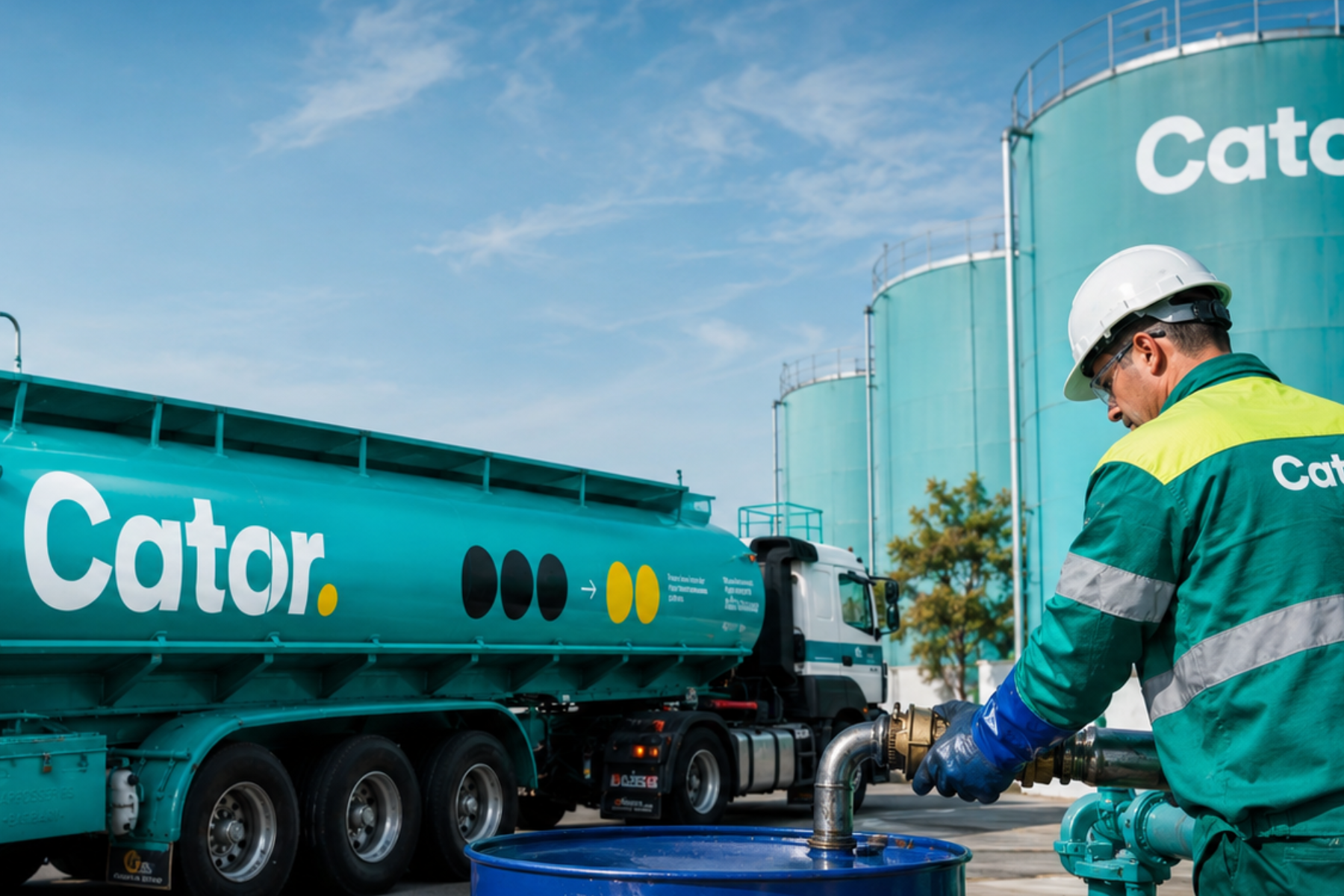
At Cator we have been leading the regeneration of used oil in Spain for more than 30 years. The improved VAXON technology incorporated in our plant in Alcover, allows us to recover about 45,000 tons per year of this resource. Contact us if you want to be part of the change towards circularity.