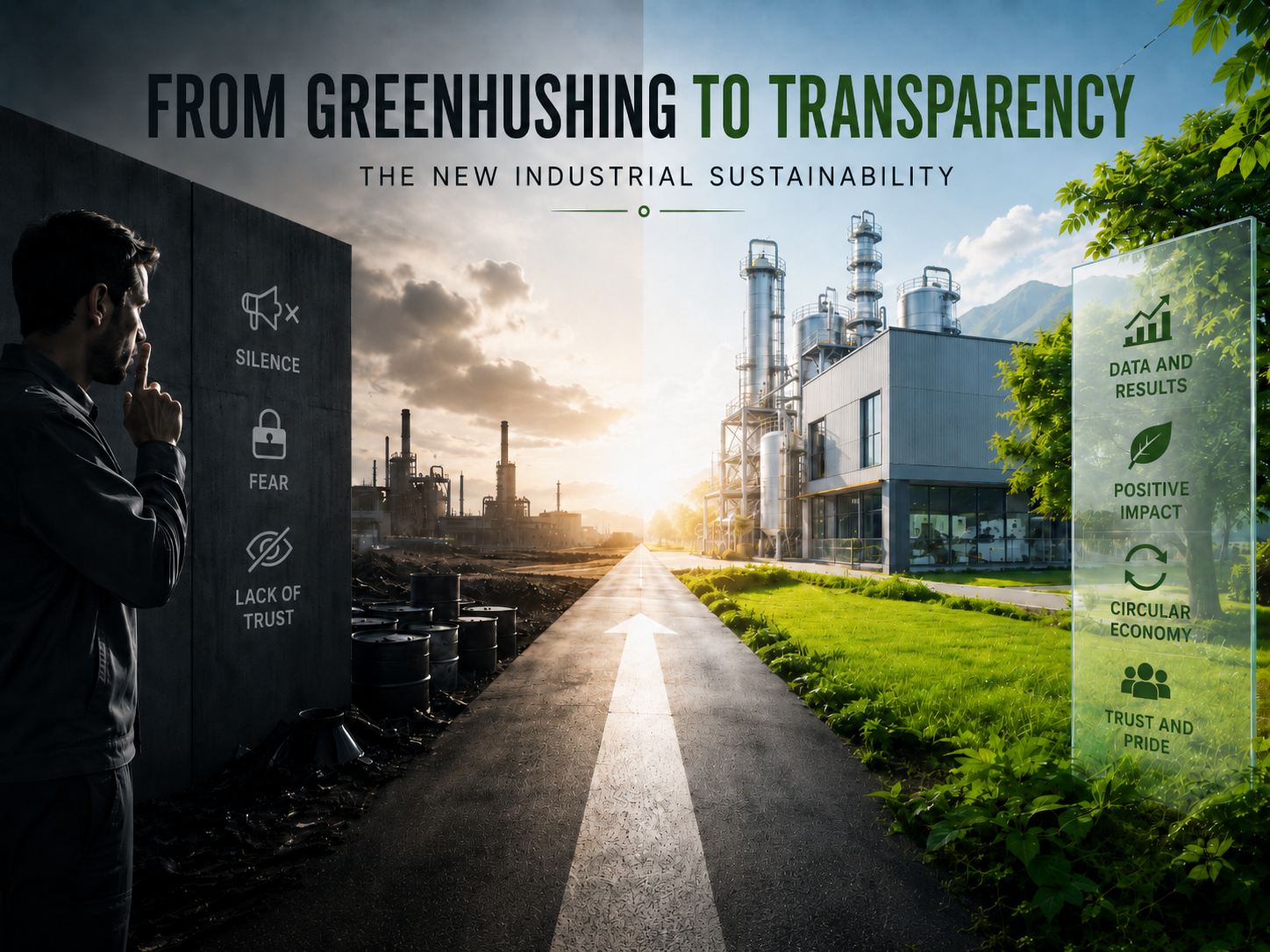
Caring for the environment has become a priority for consumers and companies alike. Increasingly, people are looking for products and services that reduce environmental impact and promote a sustainable lifestyle. However, this interest has also given rise to misleading practices, known as greenwashing, where companies appear to be greener than they really are.
What is greenwashing?
The term greenwashing combines the words “green” and “whitewashing”. It was coined in the 1980s by environmentalist Jay Westerveld, who charged that some companies were promoting superficial sustainable practices while continuing environmentally damaging activities.
Basically, greenwashing refers to marketing or communication strategies in which a company exaggerates, distorts or invents environmental commitments in order to improve its public image and attract consumers seeking environmentally friendly products and services. Often, these initiatives have no real backing in the company’s operations, generating a false perception of sustainability.
Motivations behind greenwashing
Companies that resort to greenwashing usually do so for the following reasons:
- Increase your sales: Consumers are willing to pay more for products they perceive as environmentally friendly.
- Meeting social expectations: The demands of social responsibility have forced companies to present their commitment to the environment, even if they are not.
- Reduce reputational risks: Some companies try to avoid criticism by highlighting minor initiatives as transformational.
How to identify greenwashing
Detecting greenwashing is essential to avoid falling into the trap of misleading advertising campaigns. These practices, although often subtle, present clear signs that can help you identify them.
Claims without evidence
One of the most common signs is when companies make environmental claims without providing verifiable data, reports or recognized certifications. For example: A clothing brand might advertise that it uses “recycled materials,” but not specify the exact percentage or how those materials are recycled.
Lack of transparency
Some companies highlight one positive aspect of their product while hiding other negative environmental impacts. For example: A car manufacturer may promote a hybrid model as sustainable, without mentioning the environmental footprint of producing the lithium batteries.
Use of vague language
Terms such as “natural”, “eco”, “environmentally friendly” or “green” can be used without a clear definition or regulatory support. This language generates confusion and does not guarantee product sustainability.
Misleading labels
The use of symbols that simulate official certifications or the design of green labels can mislead consumers. Some products even create their own seals to appear more environmentally friendly than they are.
Disproportionate communication
When a company spends more resources promoting its “green” initiatives than actually implementing them, it is greenwashing. This includes extensive marketing campaigns that exaggerate the importance of minimal environmental efforts.
Focus on a single positive action
Companies often highlight a small, isolated change, such as reducing the use of plastic in their packaging, while ignoring larger issues, such as carbon emissions or labor exploitation.
European regulations on greenwashing
The European Union has taken measures to combat greenwashing and protect consumers from misleading practices. Among the most prominent regulations is the Green Claims Directive(EU) 2024/825.
Key aspects of greenwashing regulations
- Verifiable evidence: All environmental claims must be supported by scientific evidence and be auditable.
- Prohibition of ambiguous terms: Companies may not use words such as “ecological” or “sustainable” without specifying what they mean in the context of their product.
- Transparency throughout the value chain: Companies must report on the environmental impact of all stages of production.
- Penalties for non-compliance: Companies that violate these regulations face fines and trade restrictions.
Impact of greenwashing regulations on consumers and businesses.
These regulations not only protect consumers, but also encourage companies to be more transparent and adopt real sustainable practices. Regulation fosters a fairer and more competitive marketplace, where companies committed to sustainability can legitimately stand out.
Examples of greenwashing
To better understand how greenwashing manifests itself, we will analyze some concrete cases and their implications without naming brands and/or companies.
Hotels and towel reuse
Many hotels invite guests to reuse towels under the pretext of protecting the environment. While this practice can have a positive impact, in many cases its main objective is to reduce operating costs, and it is not accompanied by other significant sustainability measures.
Sustainable” fashion
The fast fashion industry often uses labels such as “eco-collection” to divert attention from its overall practices. While a clothing line may be made with organic cotton, the business model as a whole still promotes mass consumption and generates a large environmental impact.

Consumer products with “natural” labels
Items such as processed foods or cleaning products often use labels such as “natural” or “chemical-free” without meeting clear standards. This creates a false sense of security for consumers.
Tree planting campaigns
Many companies advertise reforestation programs without detailing how they guarantee the growth of the trees planted or how they mitigate deforestation caused by other operations.
Greenwashing not only affects consumer confidence, but also undermines global efforts to address climate change and protect the environment. It is essential that both consumers and companies act consciously. Individuals must be critical and seek information before making purchasing decisions, while companies must adopt genuine social responsibility and sustainability practices. In this way, it will be possible to build a truly environmentally friendly market.