Reducing the carbon footprint has become a global priority to curb global warming and meet United Nations sustainability commitments. Companies play a key role in this challenge, not only by adopting renewable energies or improving their energy efficiency, but also by responsibly managing the waste they generate and adopting circular economy solutions.
By integrating more sustainable practices into their daily operations, companies not only contribute to the preservation of the environment, but can also improve their competitiveness and open up new business opportunities aligned with ESG (Environmental, Social and Governance) criteria.
What is the carbon footprint
The carbon footprint is an indicator that measures the environmental impact that a person, company, city or country generates on climate change. It refers to the total amount of greenhouse gas (GHG) emissions, emitted directly or indirectly through our activity. Its value is usually expressed in tons of CO₂ equivalent.
The main greenhouse gases are:
– Carbon dioxide (CO₂): Generated by the burning of fossil fuels.
– Methane (CH₄): With a global warming power 23 times higher than CO₂.
– Nitrogen oxides (NOx), ozone (O₃) and fluorinated compounds (CFCs, HFCs, PFCs): Used in refrigeration and air conditioning.
In addition to these gases, there are indirect activities such as deforestation, international transportation or the consumption of goods with energy-intensive production chains.
Understanding and trying to reduce the carbon footprint is key because its increase is directly linked to global warming, desertification, melting glaciers, loss of biodiversity and increasingly frequent extreme phenomena. Reducing it means betting on energy efficiency, renewable energies and changes in consumption habits, with the aim of mitigating the environmental impact and slowing down the advance of GHGs in the atmosphere.
Why it is important to reduce carbon footprint
Reducing our carbon footprint is essential to protect the planet, society and ensure a sustainable future. GHG emissions contribute directly to global warming and accelerate climate change. The Intergovernmental Panel on Climate Change (IPCC) reports warn that if emissions are not drastically reduced in the coming decades, the effects will be irreversible.
Failure to act on these emissions increases the risk of:
– Extreme heat waves and cold.
– Sea level rise.
– Ocean acidification.
– Desertification and glacier melting.
– Loss of biodiversity and freshwater scarcity.
– Increased frequency of forest fires and intense storms.
At the individual level, reducing the carbon footprint saves energy and money, while improving health and promoting sustainable habits. Simple actions such as opting for public transport, reducing meat consumption or choosing local and seasonal products have a positive impact on the environment. For companies, it represents an opportunity to optimize costs, comply with increasingly stringent environmental regulations, strengthen their reputation with customers and shareholders, and differentiate themselves in a market that is increasingly sensitive to sustainability.
In addition, measuring and reporting the carbon footprint allows organizations to outline clear reduction plans, facilitating collaboration with suppliers and corporate transparency to customers and strategic partners.
The importance of regenerated oil in reducing carbon footprint
Incorporating reclaimed oil into industrial processes is not only a sustainable practice, but a key strategy to significantly reduce a company’s carbon footprint. By replacing oil produced from petroleum with reclaimed oil, the need to extract and refine fossil resources is reduced, resulting in lower energy consumption and a significant reduction in carbon dioxide and other greenhouse gas (GHG) emissions.
This choice has a direct impact on the fight against global warming, mitigates climate change and positions the company as a benchmark in sustainability and environmental responsibility. In addition, the use of reclaimed oil demonstrates a tangible commitment to the circular economy, optimizing resources and showing customers, partners and society in general that the company integrates sustainability as part of its corporate strategy.

Among the direct benefits for companies that adopt regenerated oil are the following:
– Carbon footprint reduction
– Reduced operating costs due to greater energy efficiency,
– Compliance with environmental regulations
– Improved corporate image
– Strengthening employee commitment to sustainability.
– Tangible contribution to strategic sustainability objectives.
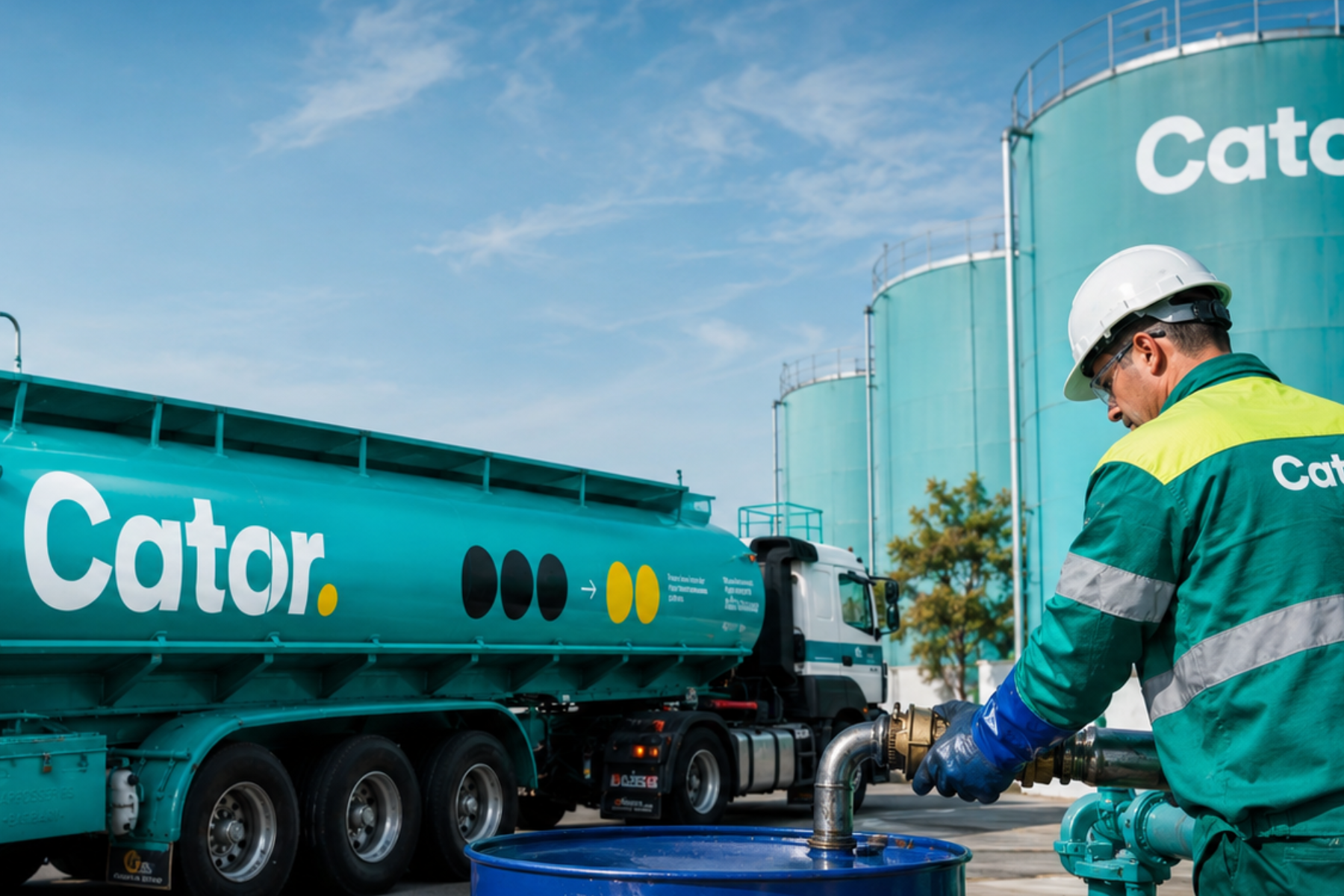
Since 1993, Cator has avoided the emission of more than three million tons of CO₂ thanks to the regeneration of used oils, contributing significantly to the fight against climate change. This achievement demonstrates that collaboration between waste-producing companies, managers and manufacturers who are committed to alternative and more sustainable raw materials is essential to move towards a greener future.