The chemical composition of used industrial oil, especially its additive package, can either facilitate or hinder its treatment. Understanding this effect is key to recovering secondary raw materials and moving towards a circular economy.
Used industrial oil is not just a degraded “oil base”: it is a complex mixture of functional additives, contaminants carried over from use and oxidation products. This combination determines, to a large extent, the recyclability of industrial oil and determines which regeneration operations are feasible, as well as the level of technological effort required.
In practical terms, additives (essential for lubricating oils to function in industrial machinery and combustion engines) can become a brake when the product reaches the end of its useful life. Therefore, understanding their influence helps to improve management and reduce the environmental impact associated with inadequate management.
Regeneration: the priority pathway and the need for extraction
Regeneration is considered the priority recycling management for used oil, because it makes it possible to produce new lubricant bases. However, for this process to be successful, there is one strict condition: additives, oxidation products and other contaminants present in the used oil must be removed.
This means that the recycling process does not only consist of “cleaning” the waste, but also of efficiently separating that which prevents obtaining a base oil of sufficient quality to be reintegrated in new cycles. When the additives present are excessively complex, separation becomes more complicated: the technological effort to separate them from the oil base increases and, with it, the need to recycle the industrial oil.
Difficulties due to complex additives
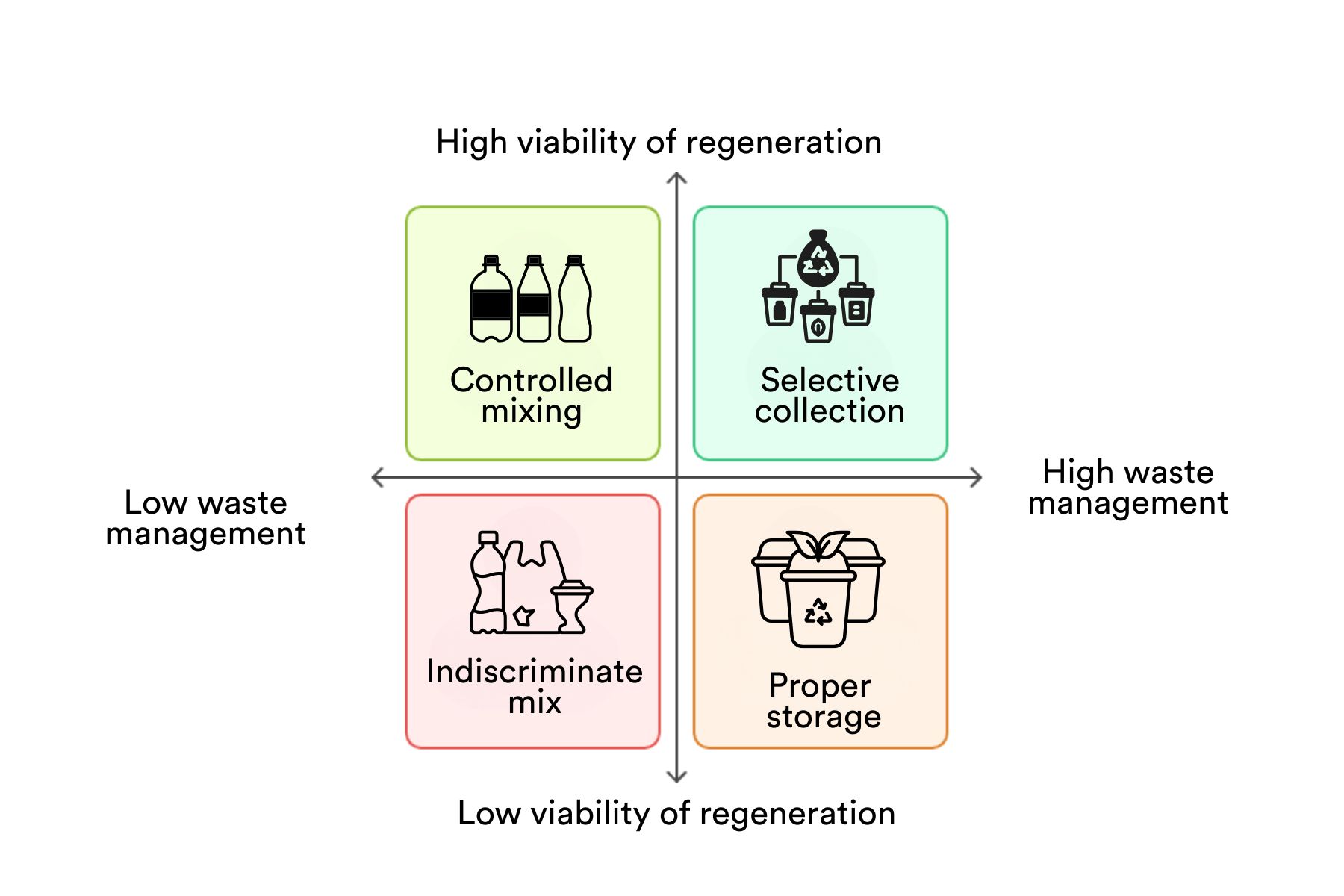
The way in which the waste is managed before reaching the plant also influences the result. The reason for this is straightforward: combining oils with different additive packages in the same container can result in
– Chemical reactions between components that were not designed to coexist.
– Emulsions or mixtures difficult to separate.
When unwanted emulsions or interactions occur, physical and chemical separation in the plant becomes more difficult. This complicates the operation, reduces efficiency and can make the most valuable destination (regeneration) no longer viable. Consequently, proper management (from storage to separate collection) becomes a critical lever to protect the quality of the waste and keep recycling options open.
Presence of hazardous components
Many traditional industrial oils contain additives with highly polluting and toxic substances. Their presence makes used oil a hazardous waste and requires prior analysis to avoid incompatibilities and environmental damage during final management.
Components that increase the hazardousness and complexity of the treatment include:
– Compounds of chlorine, sulfur and zinc.
– Heavy metals such as lead and cadmium.
– Aromatic compounds.
The consequence is twofold: on the one hand, it raises the technical requirements of the treatment (more controls and more separation stages); on the other hand, it reinforces the importance of prevention in product design, since the less problematic the formulation at source, the easier it will be to recover secondary raw materials safely.
Innovation and eco-design to improve recyclability
To improve the circularity of oil, manufacturers are obliged to act from the design phase of the lubricant (prevention). The objective is that, when the oil becomes waste, it is more suitable for treatment and recovery.
The strategies highlighted are:
– Elimination of hazardous components: new formulations are marketed that generically eliminate chlorine and sulfur to facilitate final waste management.
– Newly formulated oils: the development of products with less aggressive additives makes the resulting residue more suitable for preparation for reuse.
– Use of regenerated basestocks: incorporating basestocks that have already undergone recycling processes in the formulation of new oils helps to reduce the load of natural resources and optimizes the product’s life cycle.
This approach connects performance and end-of-life: additives remain fundamental to the lubricant’s function, but their chemical design tends to be simplified and their hazardousness reduced so that the waste is effectively reintegrated into the circular economy.
The influence of additives on the recyclability of used industrial oil is decisive: they can facilitate recovery when they are compatible with separation processes, or prevent it when they are too complex, toxic or improperly combined.