


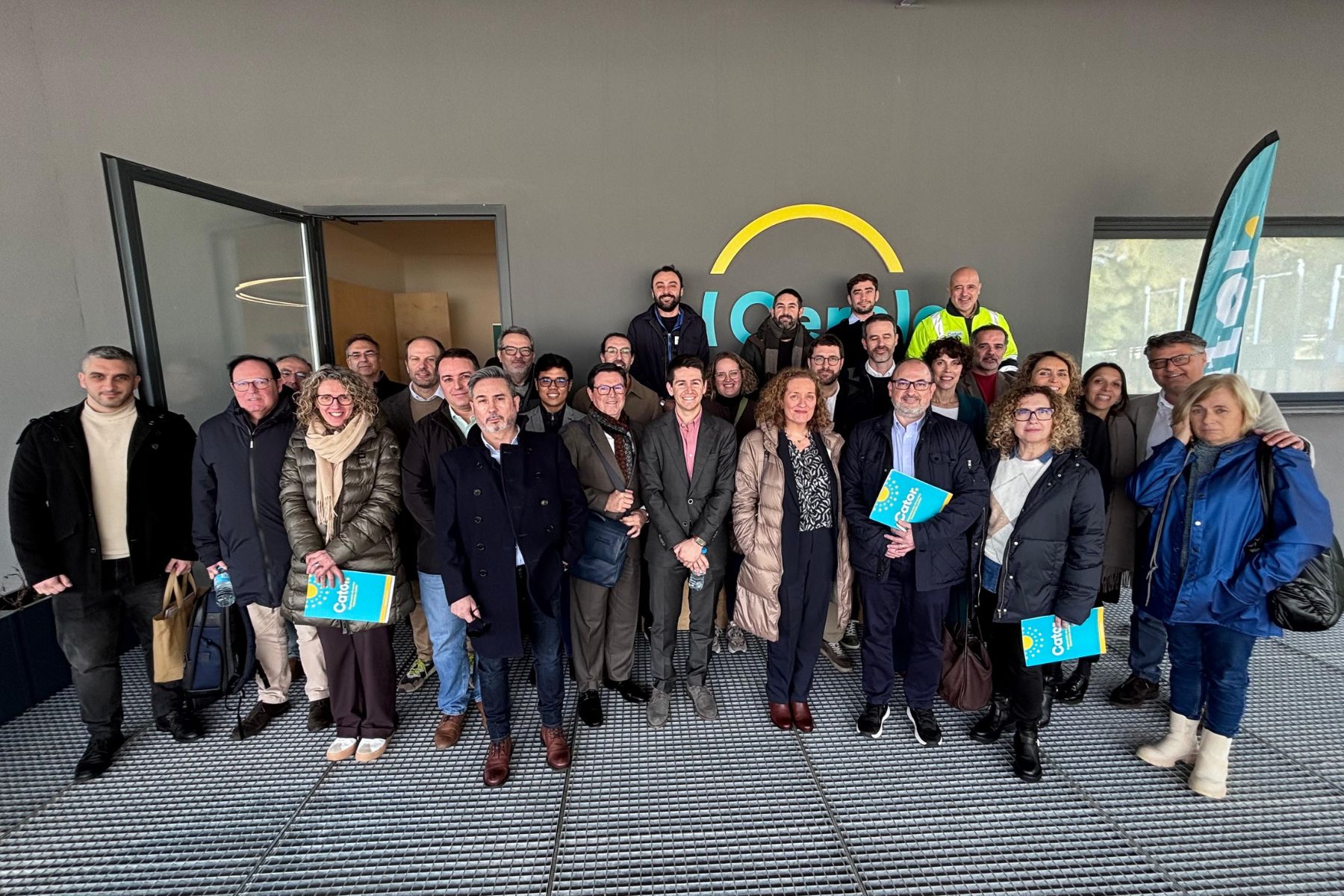
The conference “Sustainable lubricants: innovation, circularity and future”, held on February 4 at Cator Alcover (Tarragona), brought together professionals and companies from the lubricants, industrial oils and additives sector to reflect on a scenario in full transformation. The meeting revolved around three main ideas: the new regulations that will set the pace of adaptation in the coming years, the promotion of the circular economy through regeneration and the use of regenerated bases, and the need to support sustainability with technical criteria, verification and data (carbon footprint, certifications and tests).
CREC: driving the transition through sectoral collaboration
Carmen López (Cluster Manager of CREC) opened the conference highlighting that the transformation of the sector is accelerated when there is coordination, exchange and a shared vision among the different actors. Based on this idea, she explained the role of the cluster as a tool to bring the business fabric closer to both trends and current regulations, helping to anticipate changes and turn them into concrete actions.
He also highlighted the dynamization of collaboration between partners through workspaces, the connection of value chains based on waste flows and the promotion of intersectoral and public alliances.
Broseta: New legislation on industrial oils, the change that should be anticipated
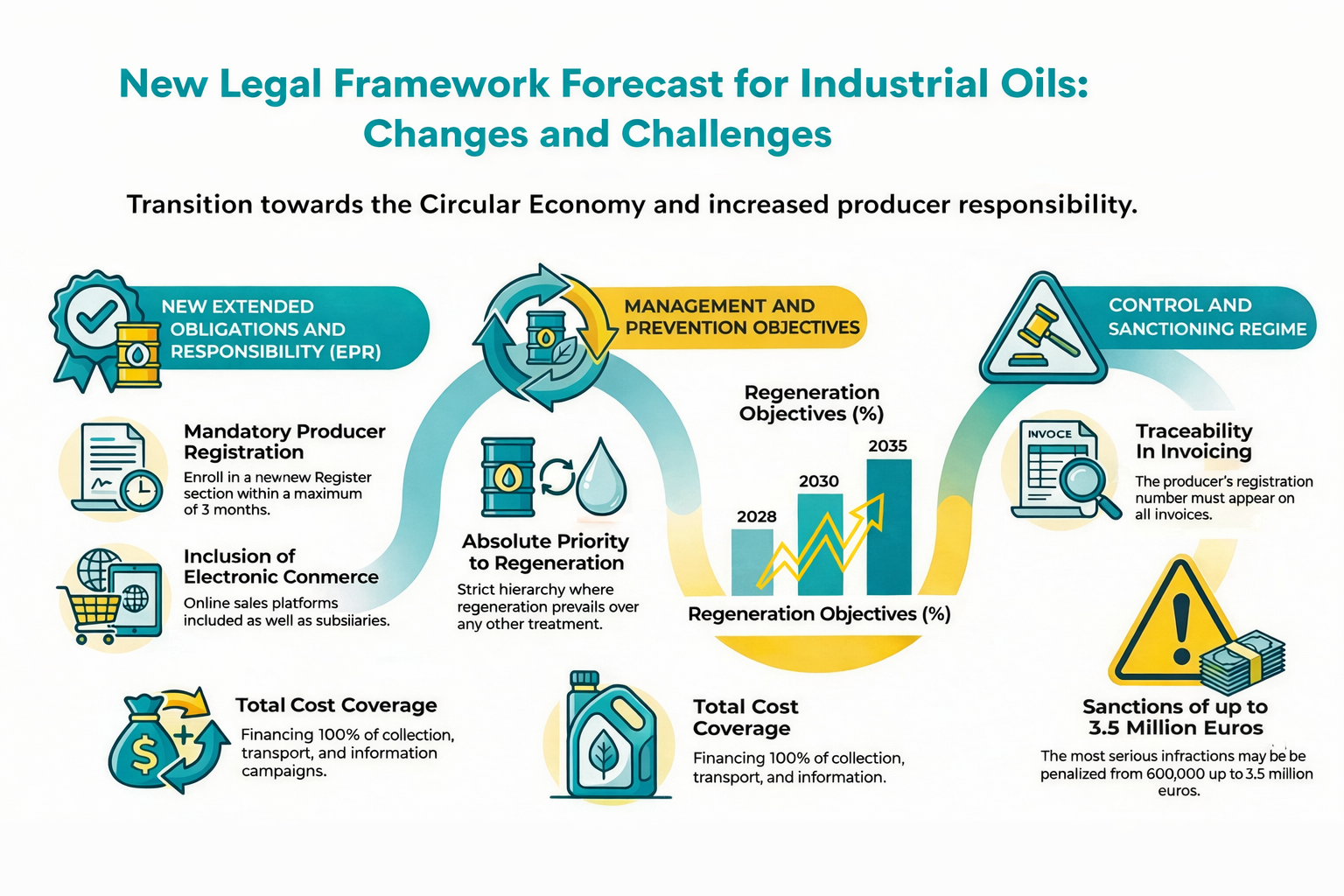
Sofía Cabedo (Senior Director, Public Law Area of BROSETA) presented the main novelties of the next decree on industrial oils and their management, which seeks to reinforce circularity, traceability and responsibility throughout the chain:
– Expected increase in national regeneration targets: 75% (by 2028), 80% (by 2030) and 90% (by 2035).
– Reinforced RAP: specific registration of industrial oils and mandatory registration within 3 months of entry into force.
– E-commerce: the platforms may act as a subsidiary producer, assuming RAP obligations.
– Prevention plans: if introduced >10 tons/year, plan every 5 years to extend useful life and facilitate recycling.
– More focus on real regeneration: after treatment, at least 70% of the result should be used as a lubricant base for new oils.
– Digitalization and traceability: integration of eSIR and obligation for the Autonomous Regions to implement electronic processing in 2 months.
– More requirements and penalties: the producer will assume 100% of the costs and fines can reach up to 3,500,000 euros in very serious cases.
Regenerated bases, a safe bet for circularity
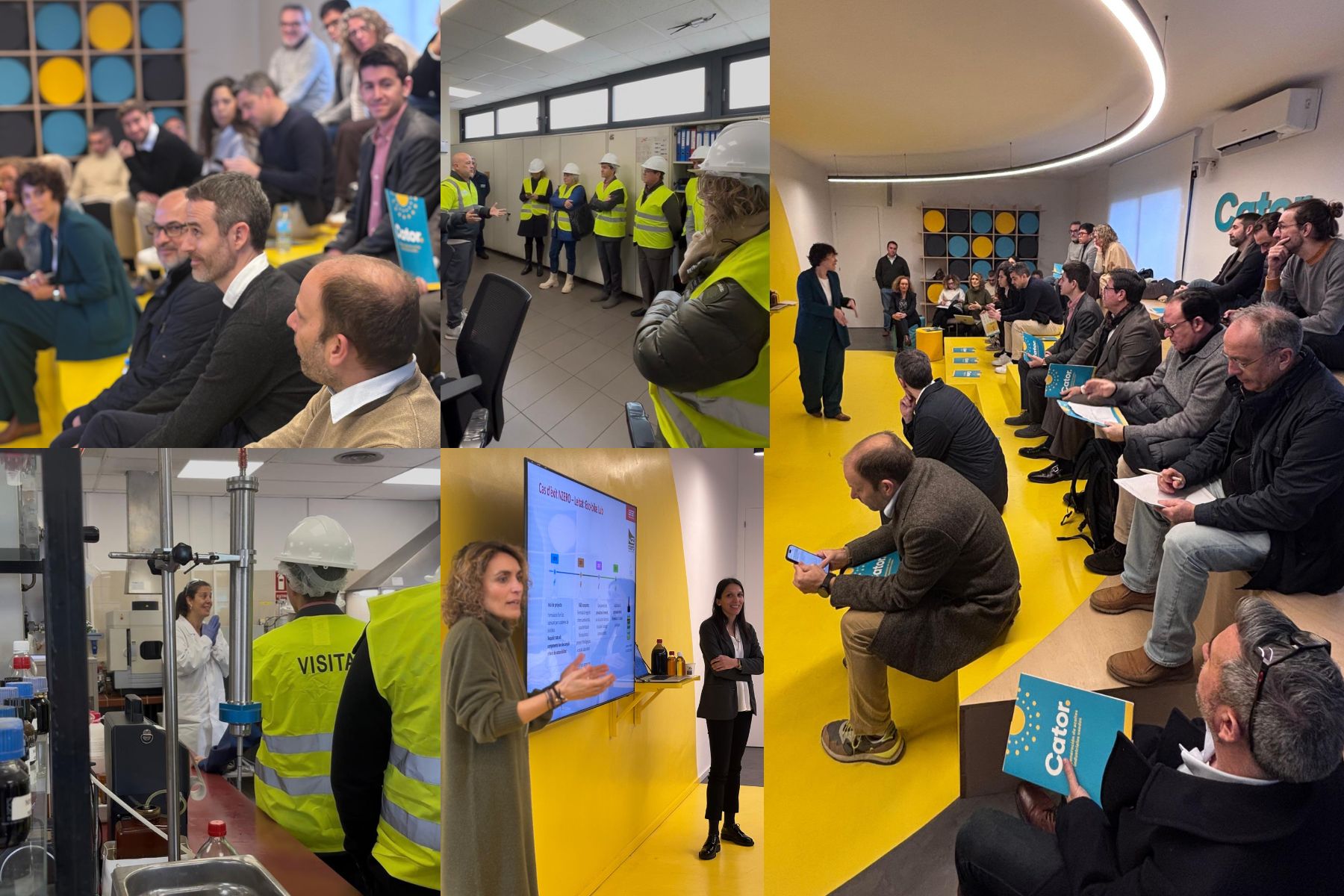
In Cator’s contribution, Lluís Gimeno (Director of Circular Economy) and Toni Valls (Plant Manager) emphasized that circularity begins with the control of used oil: prior sampling and laboratory analysis to ensure that it can be regenerated and to avoid incompatibilities. Special attention was drawn to PCBs, chlorinated oils, thermal oils and saponifiable esters, which can complicate treatment.
At the process level, the regeneration process was explained in stages to obtain high quality bases, with separation of water and glycols, recovery of light fractions and final production adjusted to specifications. The internal circularity of the plant was also highlighted: water recovered from the process itself, rainwater collection, solar panels and energy use. Finally, advances in applied R&D were shared: reduction of product odor, new capacity to regenerate glycols and efficiency improvements (up to +20% in service factor).
Leitat: EU Ecolabel as a technical tool for sustainable lubricants and importance of applied research
On the part of Leitat, Laura Batlle (Head of Advanced Industrial Fluids Unit) and Marta Escamilla (Head of Sustainability Area) focused on the fact that, in order for sustainability to be accreditable and useful for the market, it must be supported by objective criteria, external verification and data. Firstly, they contextualized the EU Ecolabel as a European Union ecolabel based on strict criteria covering the entire product life cycle (ingredients, toxicity, biodegradability, performance, etc.).
The carbon footprint was also highlighted as a practical tool for measuring and comparing the environmental impact of both organizations and products, identifying where the greatest emissions are concentrated and guiding data-driven improvement decisions. Successful case studies showed how this type of analysis can demonstrate significant reductions compared to conventional alternatives and, at the same time, identify that much of the impact is often linked to the choice and origin of raw materials, so that eco-design and the selection of ingredients are key from the outset.
The conference made it clear that the sector is moving towards a more demanding model in which regeneration will be a priority and measurable, with quantitative targets and requirements that will affect the entire chain, including Extended Producer Responsibility, traceability and digitization. Overall, the final message was shared: progress will be faster and stronger if there is a combination of sectoral collaboration, early compliance and evidence-based decisions.
Discover the video summary of the day here.


